 NGO Water Saves
Give Water,
Give Life.
NGO Water Saves gives clean water to people who need it most.
NGO Water Saves
NGO Water Saves gives clean water to people who need it most.
Our Mission
A third of humanity lacks reliable access to safe drinking water. The consequences are devastating: waterborne disease, preventable child mortality, lost education, poverty, and forced migration.
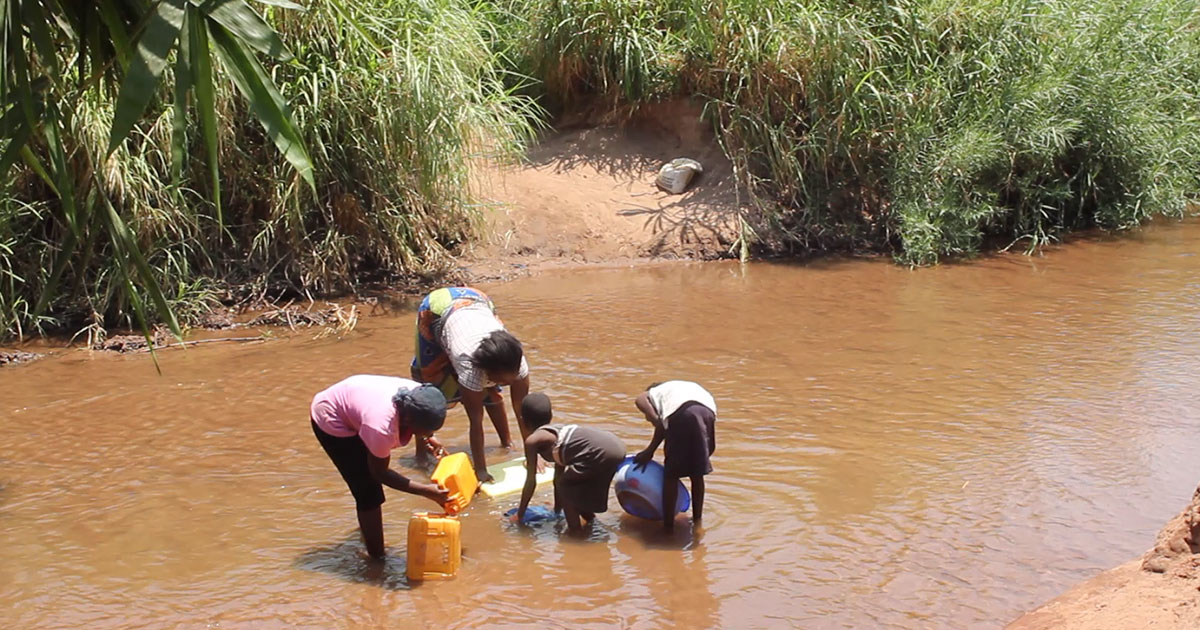
Women and children carry the heaviest burden. In communities without local water access, hours are spent each day collecting water from unsafe sources — hours lost to missed schooling, lost work, and futures left unreached.
Existing aid models, however well-intentioned, are structurally fragile. They depend on donor cycles, fluctuating budgets, and external goodwill. When funding ends, the water stops.
NGO Water Saves brings clean water — and everything that follows from it — to the communities that need it most.
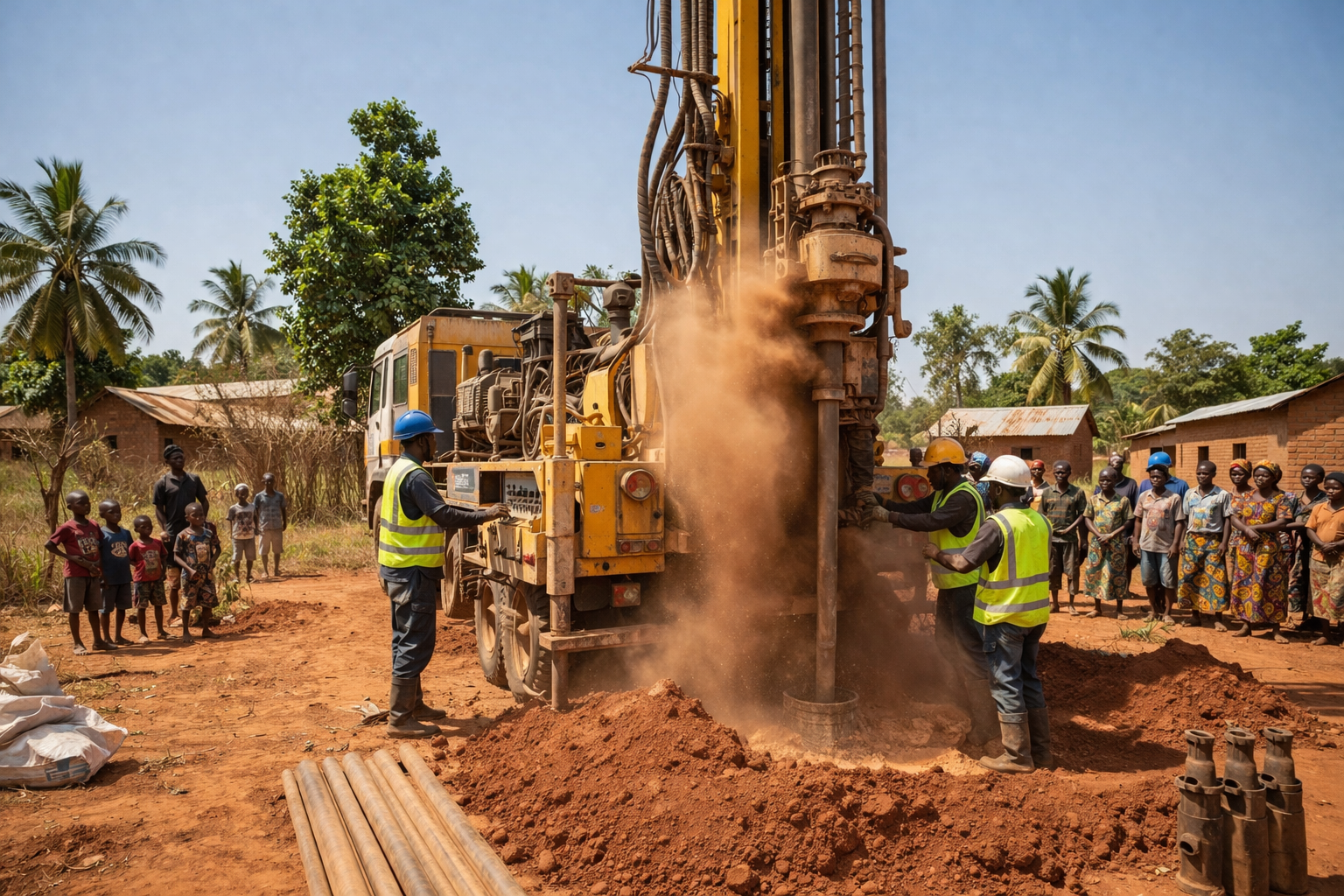
We drill boreholes, build water points, and install sanitation facilities. We teach communities how to protect their health and grow their own food. And we establish cooperatives that turn water access into lasting economic independence.
"A world in which no one is more than a twenty-minute walk from clean, safe water — and where that water is the foundation for health, education, dignity, and economic independence."
What We Do
NGO Water Saves works across four areas. Each one builds on the last — clean water enables sanitation, sanitation keeps children in school, education teaches communities to grow their own food, and agriculture generates income. Together they form a complete pathway from water access to community independence.
Pillar 1
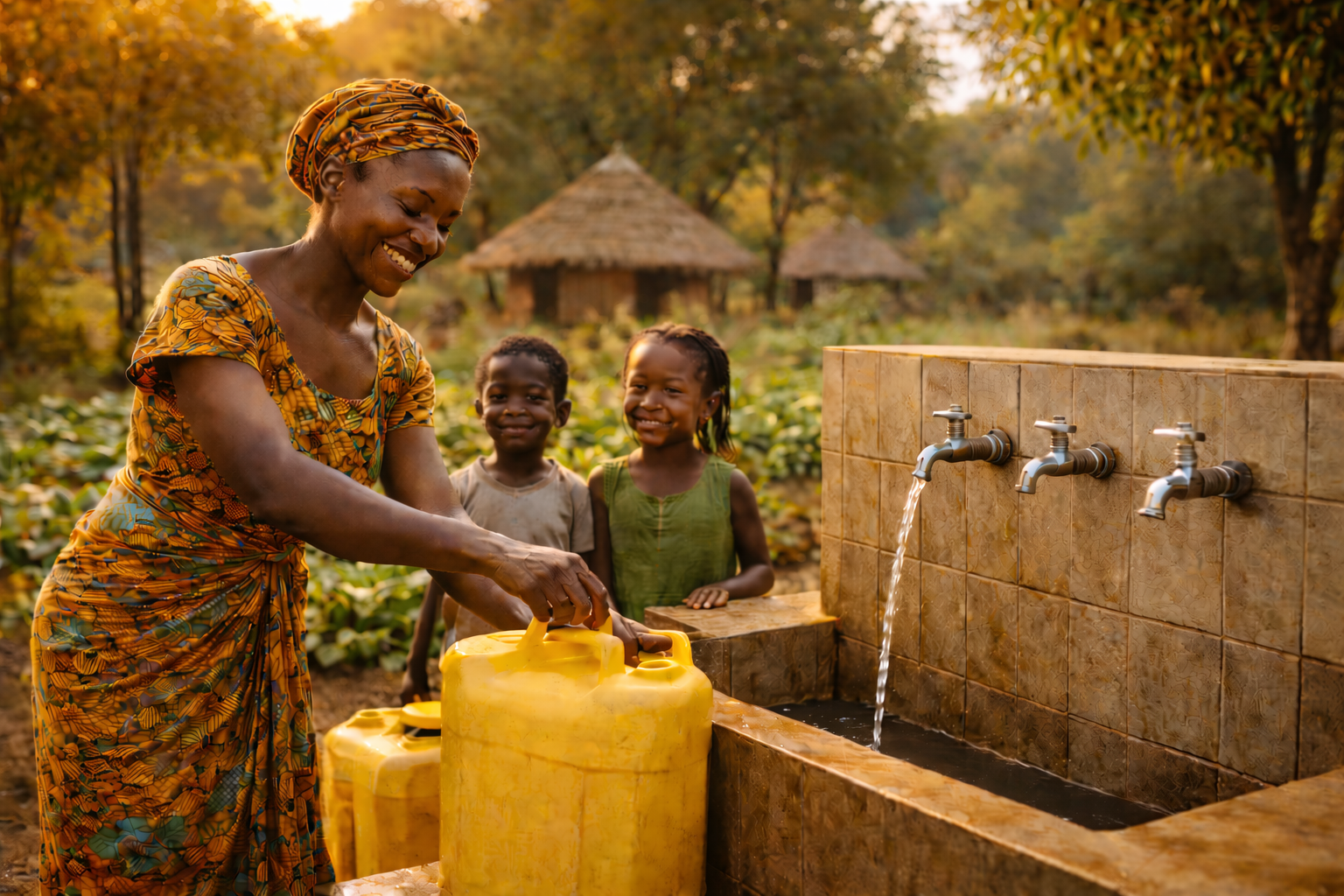
Everyone in the communities we serve has clean, safe water — every day, at a price they can afford.
We pump water from solar-powered boreholes through secure tap stands serving 2,000 to 5,000 people per installation. Water is sold at an affordable price, funding local attendants and maintenance — so the system keeps running long after we have built it.
Each water point is managed by elected community members, with a strong preference for women in leadership roles.
Our standard: 30 to 40 litres per person per day, with no water point further than a 20-minute walk.
Pillar 2
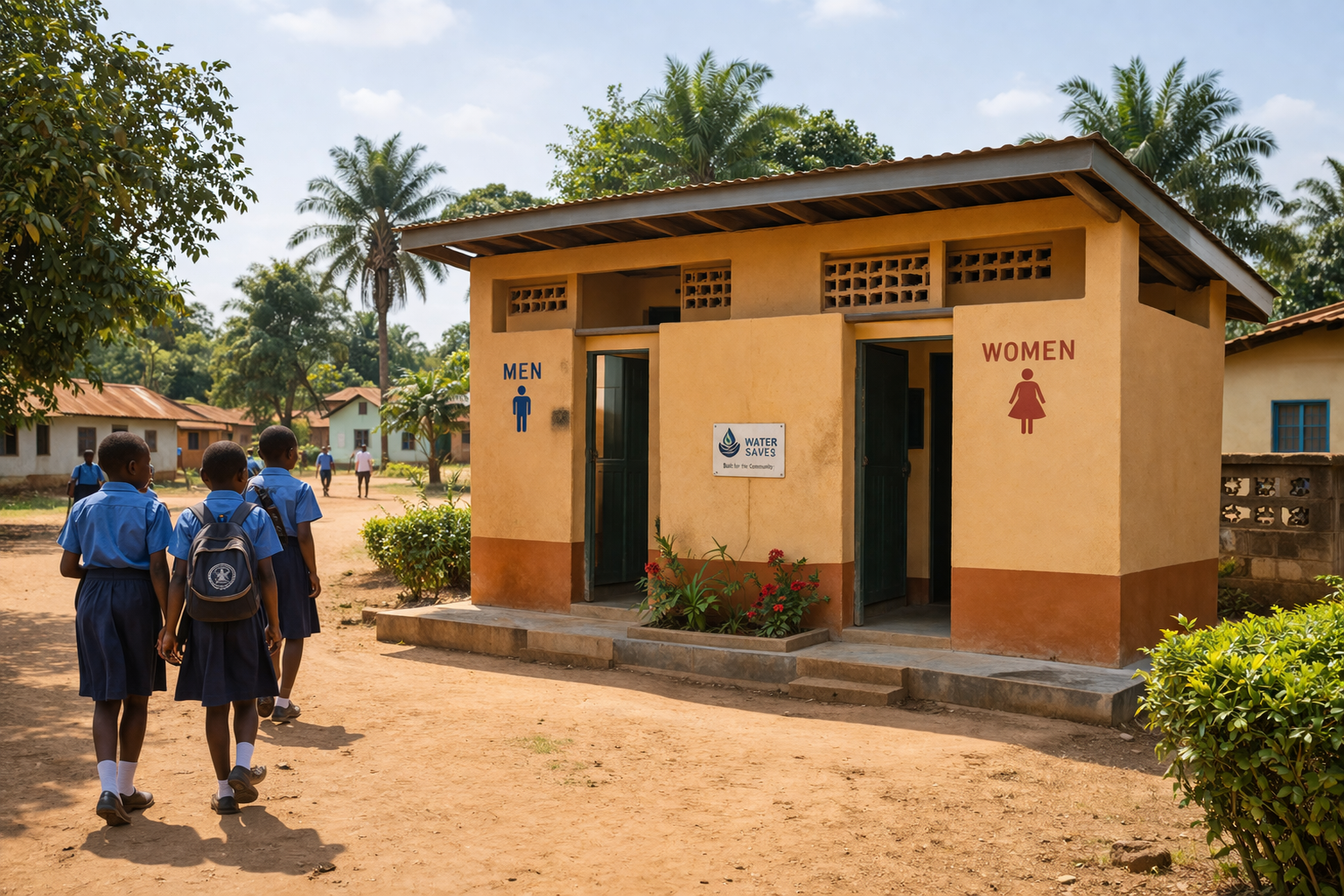
Clean water and sanitation go together. Without proper sanitation, waterborne disease persists even when water is clean.
We build gender-separated sanitation facilities alongside every water project — for schools, health centres, and households. We also run hygiene education programmes that teach families how to prevent disease: handwashing, water storage, waste management. The result is a real and lasting reduction in illness in every community we serve.
Pillar 3
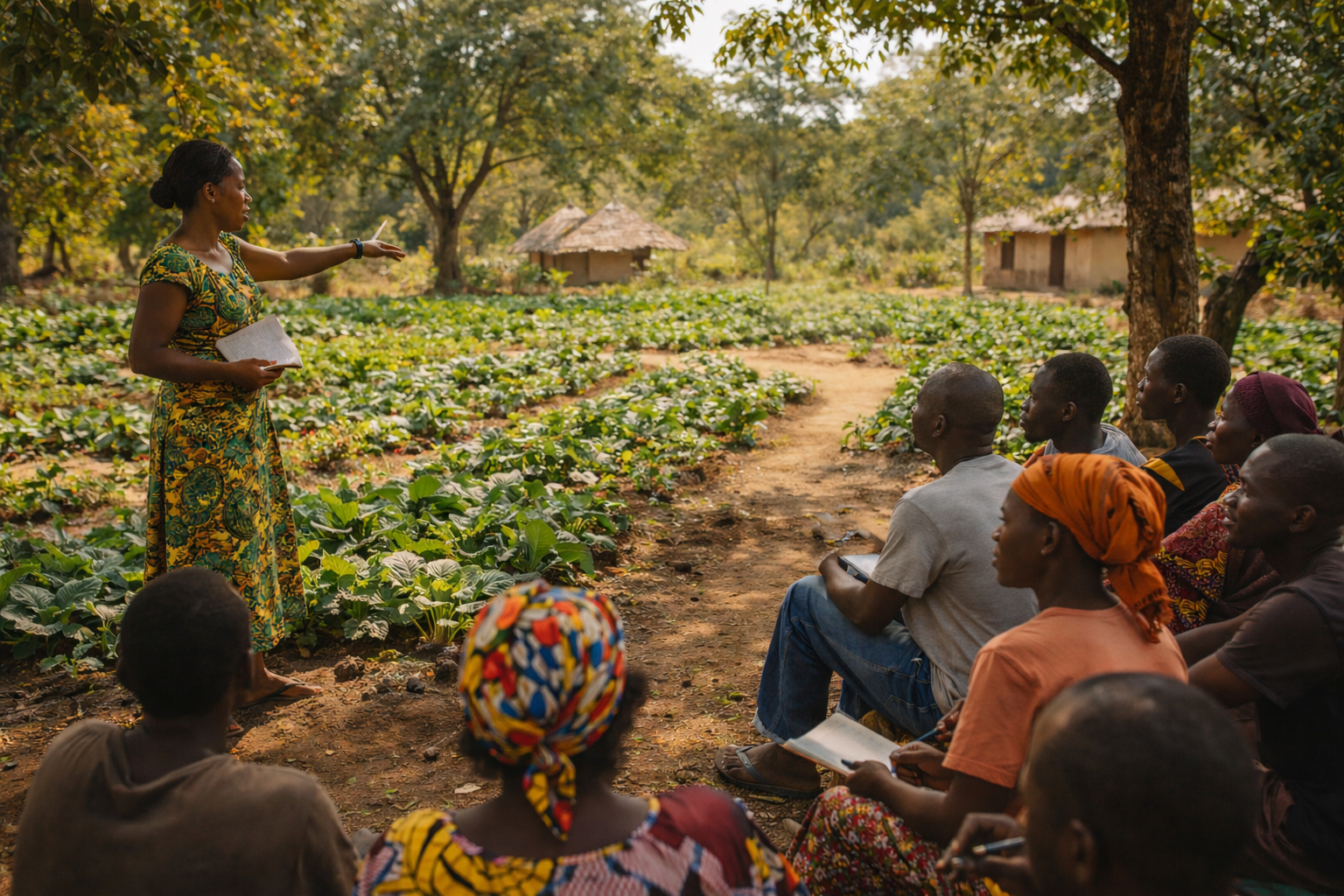
We organise hygiene education programmes in every project area. We also teach communities the principles of sustainable agriculture and permaculture — how to grow their own food in an environmentally responsible way, with techniques designed to make the most of limited water availability.
Knowledge, once given, cannot be taken away.
Pillar 4
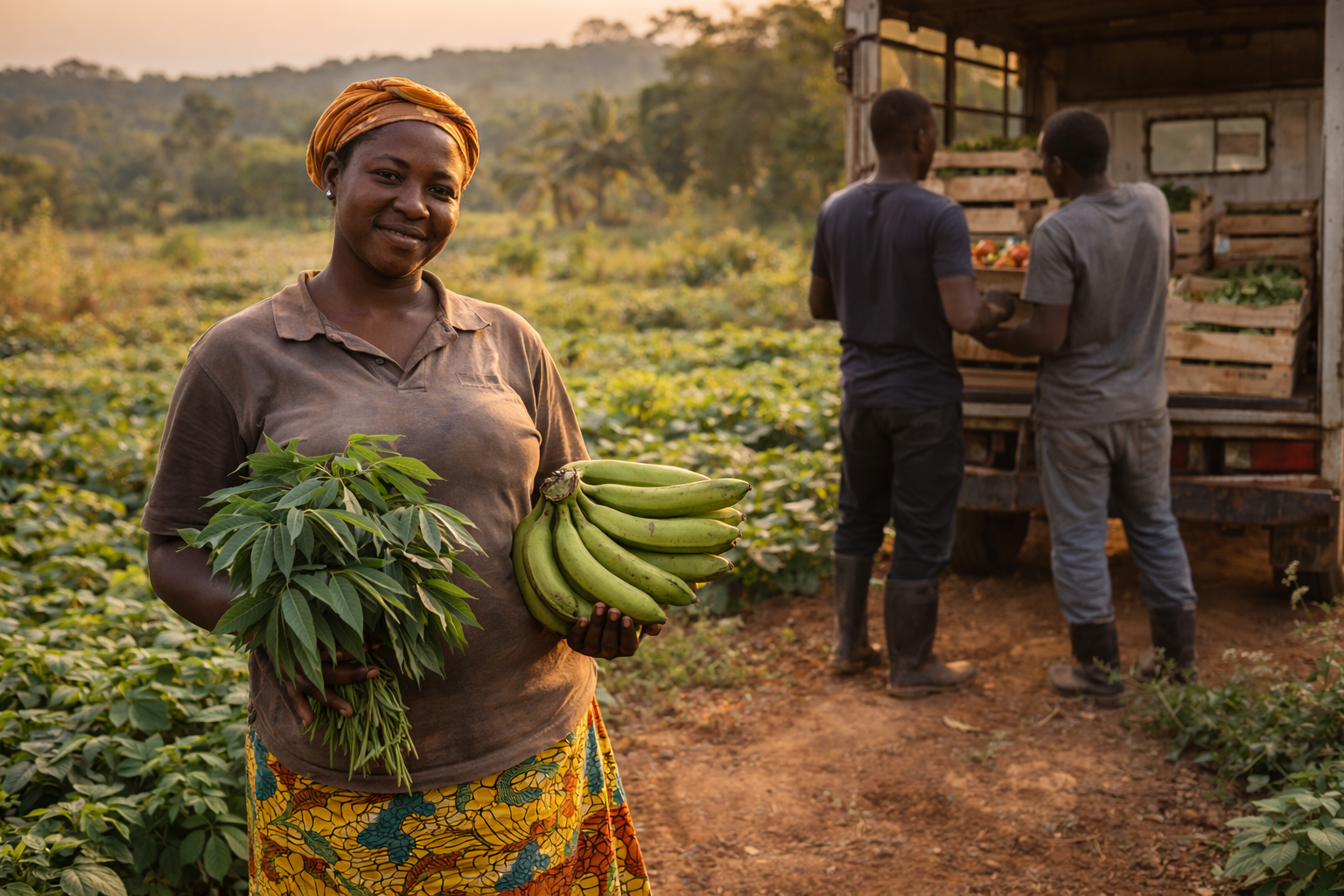
The Water Saves Cooperative buys farmers' harvests and sells them in city markets — returning the profits directly to the producers. Individual farmers and community gardens alike can participate.
Villages grow more prosperous, season by season.
The Model
 ?
? is a premium natural water, locally produced and sold in developing countries. It is a real commercial product — bought in shops, restaurants, and hotels.
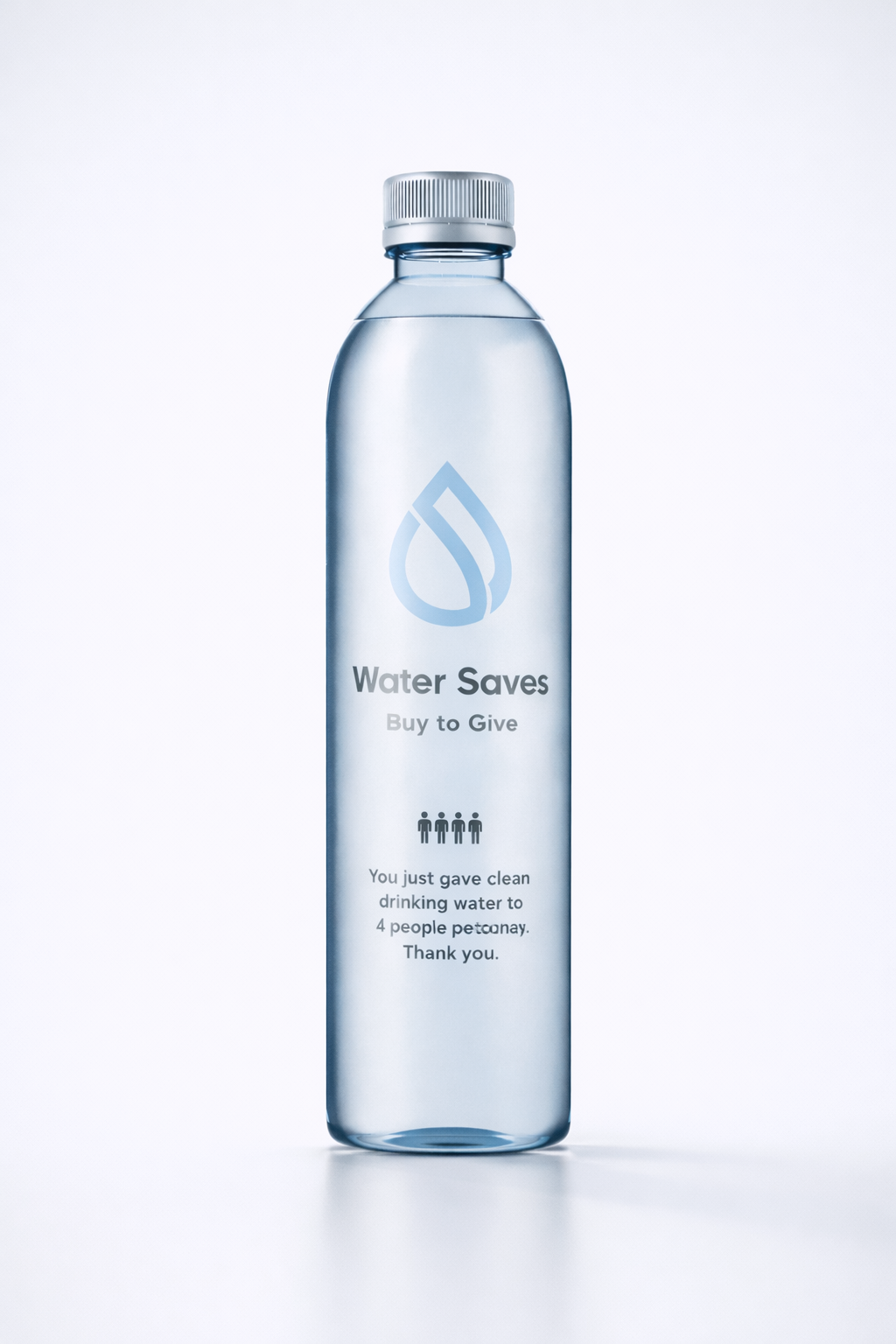
Buy to Give creates a genuine reason to choose every day. When you know that the water you drink gives water to 4 people who have none, every bottle becomes an act of giving — within reach, every single day.
It works like this:
is produced and sold locally in developing countries."Selling water to those who can pay is the most graceful way to give water to those who cannot."

For Development Finance Institutions, government agencies, and impact investors, this model offers something exceptional: permanence.
The DFI co-invests as a 38.2% minority equity shareholder in a local African company — a private, for-profit business incorporated in the target country. Social impact is a permanent legal commitment, embedded in the founding documents of that company and impossible to change. The NGO's funding scales automatically with commercial success.
The DFI receives a preferred dividend on its equity stake, a board seat on the African subsidiary, and a board seat on this NGO — direct governance over both the business and how the 61.8% is deployed.
Full details of the Water Saves investment model: watersaves.world →Our Impact
The impact of clean water is immediate. When a community gets a functioning water point, everything changes.
Waterborne diseases — cholera, typhoid, diarrhoea — are among the leading causes of preventable death in communities without clean water. When we install a water point, disease rates fall sharply. Children who were chronically ill begin to thrive.
Children — especially girls — spend hours each day collecting water when there is none nearby. Clean water close to home means more children go to school. Attendance rises. Futures brighten.
The burden of water collection falls overwhelmingly on women and girls. Clean water infrastructure frees this time. Combined with our policy of women in water management leadership, every project contributes to gender equality.
Clean water supports agriculture, food processing, and local commerce. Through the Water Saves Cooperative, communities access urban markets and keep the value of what they grow. Villages grow more prosperous, season by season.
NGO Water Saves contributes directly to nine UN Sustainable Development Goals.
Economic empowerment through the Water Saves Cooperative
Sustainable agriculture and permaculture education
Reduction of waterborne disease; hygiene education
Children freed from water collection; education programmes
Women in water management; reduced burden of collection
Our core mandate
Local employment; Cooperative income for communities
Climate-resilient water infrastructure protects communities against drought and changing rainfall patterns
The Water Saves / NGO Water Saves model as a replicable framework
Our impact grows in direct proportion to Water Saves' expansion. Each new factory, each new market, means more boreholes, more water points, and more communities served. There is no ceiling — because the mechanism is permanent and the model is replicable.
Governance
NGO Water Saves is an independent non-governmental organisation, governed by its own Board of Directors. It operates separately from Water Saves SRL, the commercial enterprise with which it is financially linked. This independence is structural and deliberate.
The Board of NGO Water Saves oversees all activities of the NGO, approves annual programmes and budgets, and ensures that funds are deployed effectively, transparently, and in alignment with our mission.
The Board includes representatives with expertise in development finance, water infrastructure, community development, and governance. A seat on the Board is reserved for any institutional investor partner — such as a Development Finance Institution.
Water Saves SRL provides direction to the NGO in areas of brand alignment, geographic coordination, and impact reporting. All field operations, technical procurement, and programme implementation are managed independently by the NGO and its appointed partners.
This separation ensures that NGO Water Saves can be assessed, audited, and held accountable as a genuinely independent entity — meeting the standards required by development finance institutions, government agencies, and international donors.
NGO Water Saves is committed to full transparency. Impact reports are produced annually and made available to all partners, donors, and institutional stakeholders.
Full team profiles and confirmed appointments will be published here shortly. The NGO is currently finalising its governance structure and team composition.
• President — [Name to be confirmed]
• Coordinator — [Name to be confirmed]
• Institutional Relations — [Name to be confirmed]
• [Additional team members to be added]
Note: Water Saves SRL provides the NGO with strategic support through its CEO and founder, Michael Asbeek Brusse, and through other senior members of the Water Saves team. This support is advisory and does not constitute governance of the NGO.
Get in Touch
NGO Water Saves welcomes contact from Development Finance Institutions, government agencies, and impact investors. Please use the contact form or write directly to info@eausauve.org.
For information about the Water Saves investment model, please visit www.watersaves.world.
NGO Water Saves operates under the name ONG l'Eau Sauve in French-speaking countries and regions.